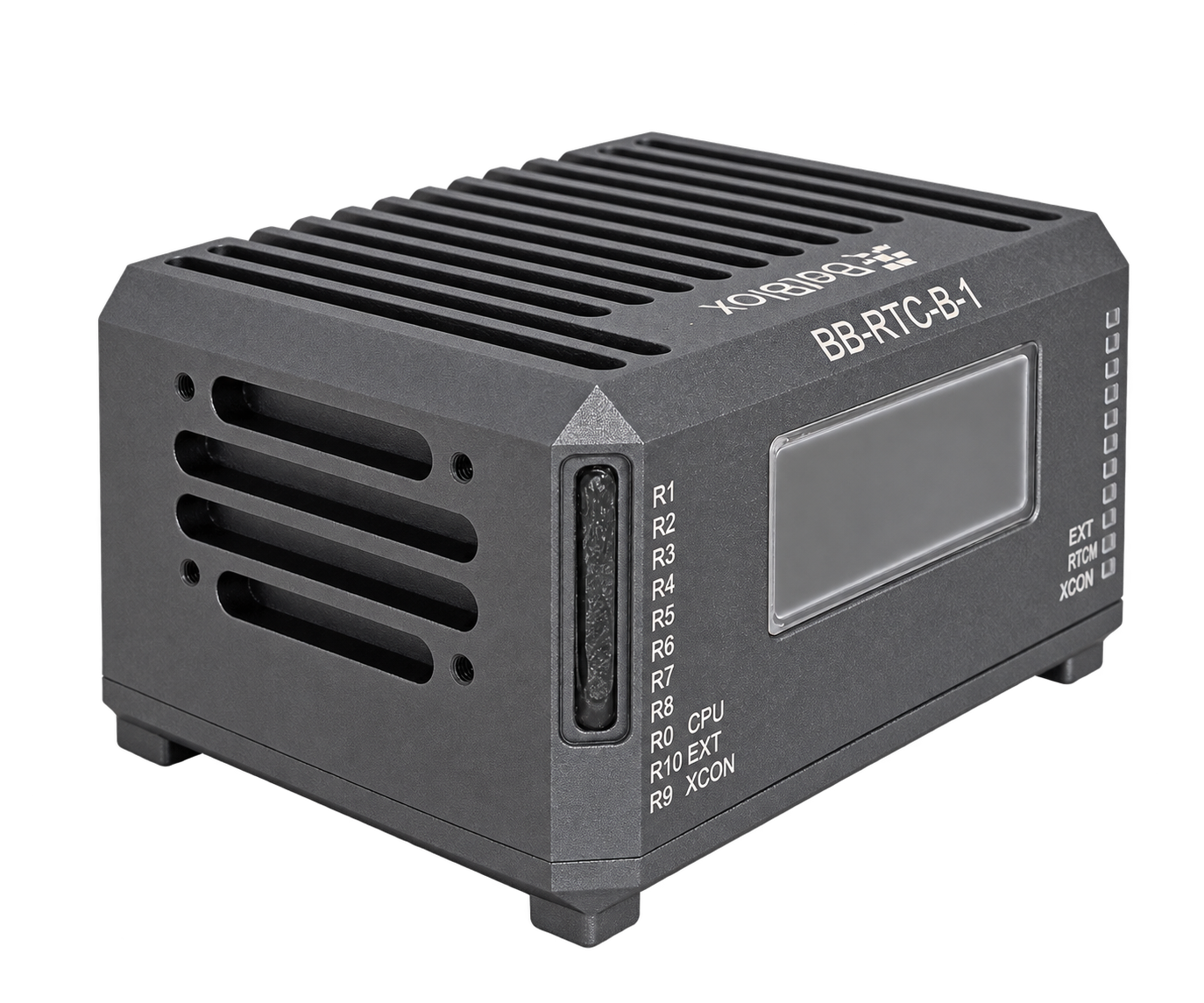
SwitchCore Module | 8 Port Ethernet Module
Encapsulated, Management "Network-on-module" SwitchCore Module is an NDAA...
From$375.00
RouterCore (Patent Pending) is a tiny, rugged Layer 3 router that packs serious networking capability into 68 x 47 x 33mm.
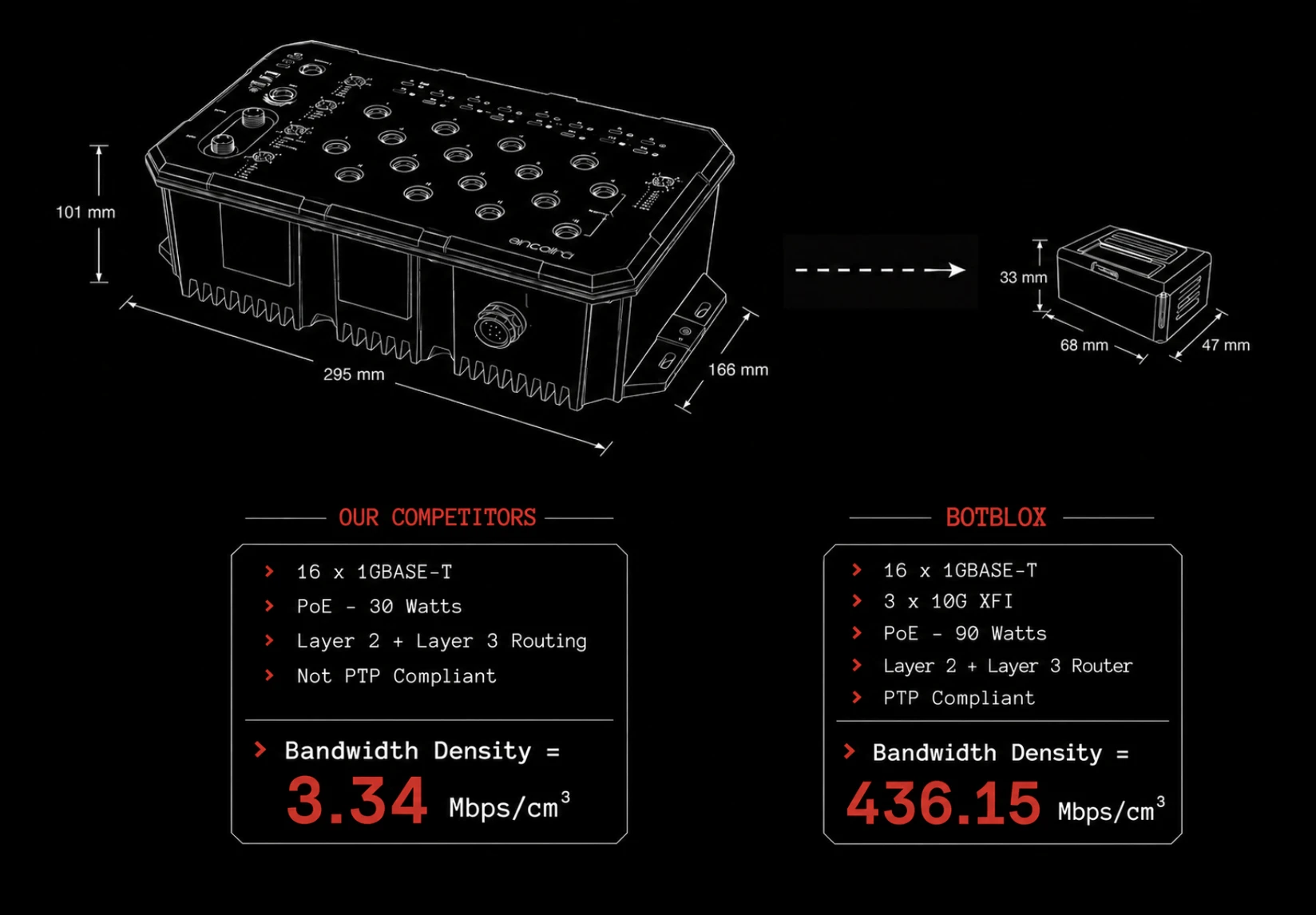
With 16 × Gigabit Ethernet ports and 3 × 10Gbps interfaces in an embeddable module, RouterCore is designed for edge AI, autonomous systems and mobile compute platforms moving large amounts of data between cameras, sensors, computers and other onboard hardware.
It brings high-bandwidth networking, routing, precise timing, PoE, wireless connectivity and general-purpose interfaces together in a single compact module, without requiring a separate router, switch or interface board.
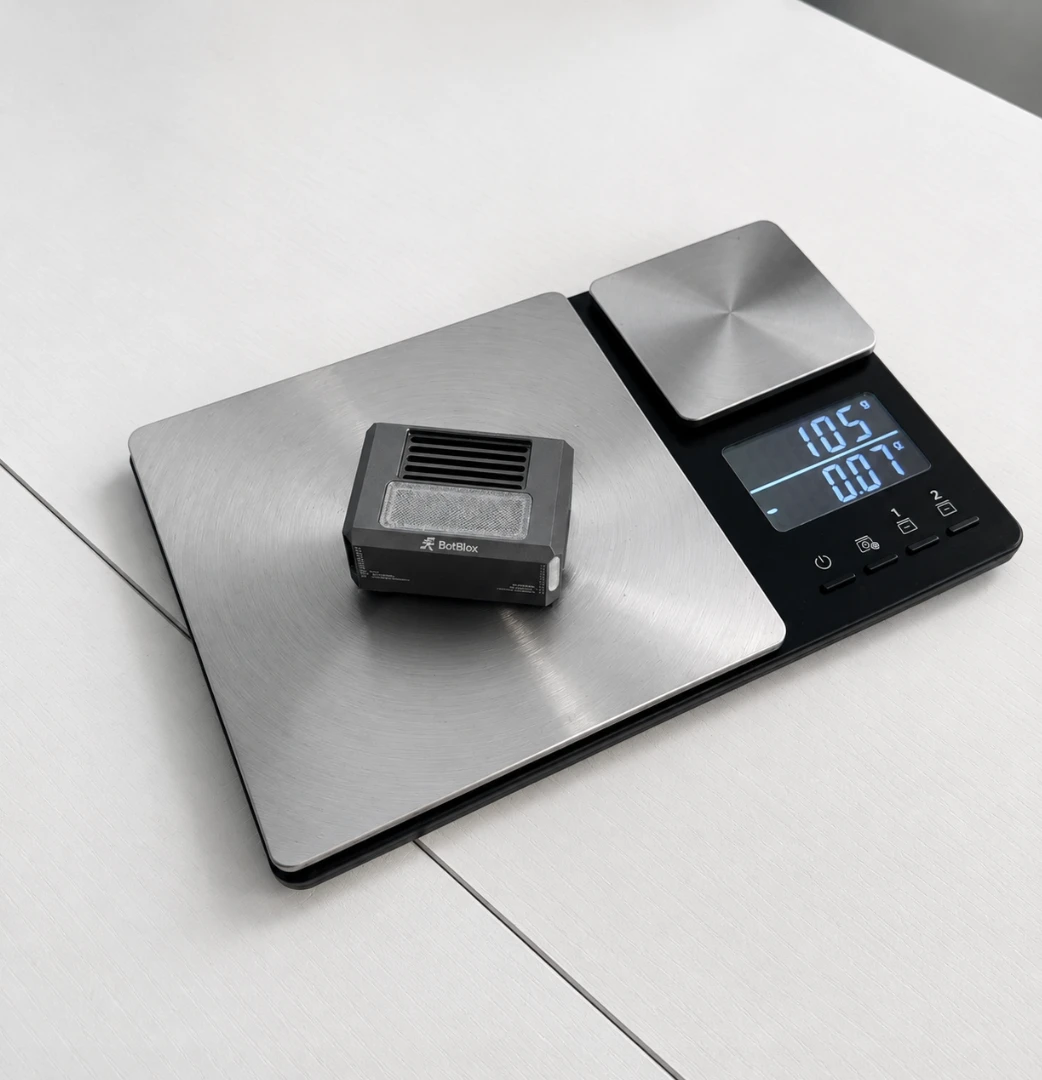
Designed around the SWaP constraints of drones, robotics, vehicles, satellites and other mobile platforms, RouterCore delivers high port density while keeping size, weight and power consumption low. It is built for systems operating in harsh environments across air, land, sea and space.
RouterCore provides:
That gives engineers enough network capacity to connect large sensor suites, cameras, edge computers and other high-bandwidth devices without building a network around several separate switches.
RouterCore isn't just a high-port-count Ethernet switch. It includes Layer 2 and Layer 3 networking features for managing traffic directly at the edge.
Layer 3 functionality includes:
RouterCore runs Linux/OpenWRT, giving engineers a familiar platform for configuring and managing networking directly onboard the system.
For applications where cameras, sensors and compute need to agree on exactly when something happened, RouterCore includes full IEEE 1588v2 Precision Time Protocol (PTP) support.
Supported timing modes include:
This makes RouterCore particularly useful in sensor fusion, autonomy, robotics and distributed compute systems where accurate synchronization between networked devices is important.
RouterCore also brings common embedded interfaces directly into the module, reducing the number of additional boards and adapters required around your network.
It includes:
At the center is a Microchip SAM7 processor with an 800 MHz ARM9 core, 2 Gbit DDR3L memory and crypto engine.
RouterCore uses a 200-pin Samtec SEARAY stacking connector, allowing the module to become part of a larger embedded system rather than requiring a conventional standalone router enclosure.
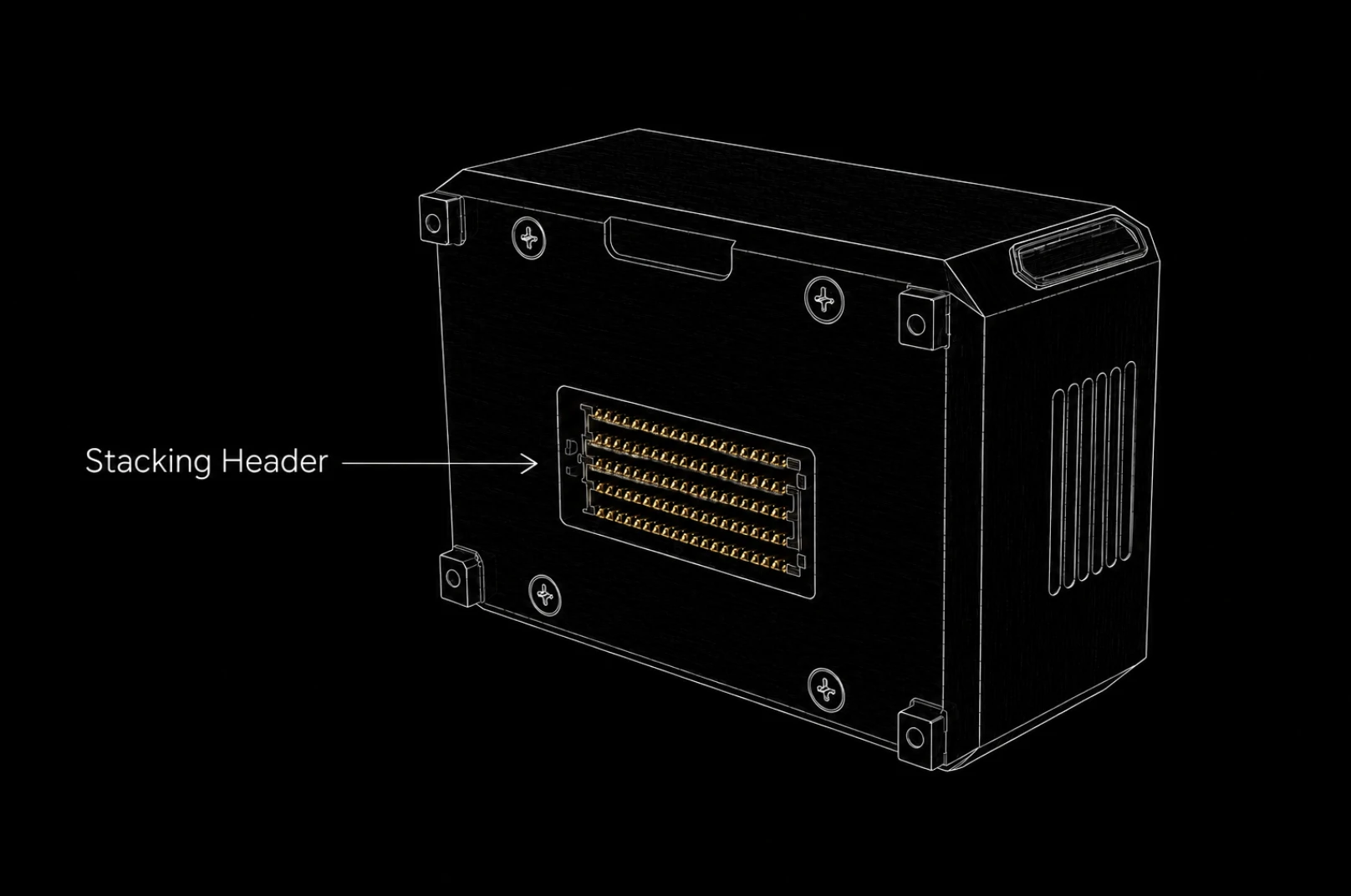
You can use RouterCore with our RouterCore BaseBoard for a fast, ready-to-use implementation, or integrate the module directly onto your own custom PCB.
This makes it possible to build the networking around the mechanical and electrical requirements of your platform instead of designing the platform around a conventional router.
RouterCore accepts a wide 5–60 VDC input, with reverse-polarity and overvoltage protection.
That wide input range makes it easier to integrate into battery-powered and vehicle systems without adding another dedicated power conversion stage just for the network.
Cooling is completely passive, with an aluminum 7075 chassis designed to dissipate heat without fans or other moving parts.
RouterCore was designed around the conditions encountered by mobile systems rather than a server rack.
The module has been tested against environmental conditions including:
All of this is packed into a module designed for platforms where every gram, watt and cubic centimeter counts.
Use our RouterCore BaseBoard to get started quickly, or mount RouterCore directly to your PCB for a fully embedded implementation.
Check out our RouterCore BaseBoard for the module.
RouterCore Module Product Brief
RouterCore ECAD Symbol and Footprint
SKU · BB-RCM-A-1
Encapsulated, Management "Network-on-module" SwitchCore Module is an NDAA...
Power over Ethernet, finally made easyPower over Ethernet (PoE) a
What is SPEBlox Module? SPEBlox Module is a tiny, embeddable, PCB mount m
Compact, Rugged routing for UAVs, Robotics and Imaging with OpenWRT Rugged SOM...
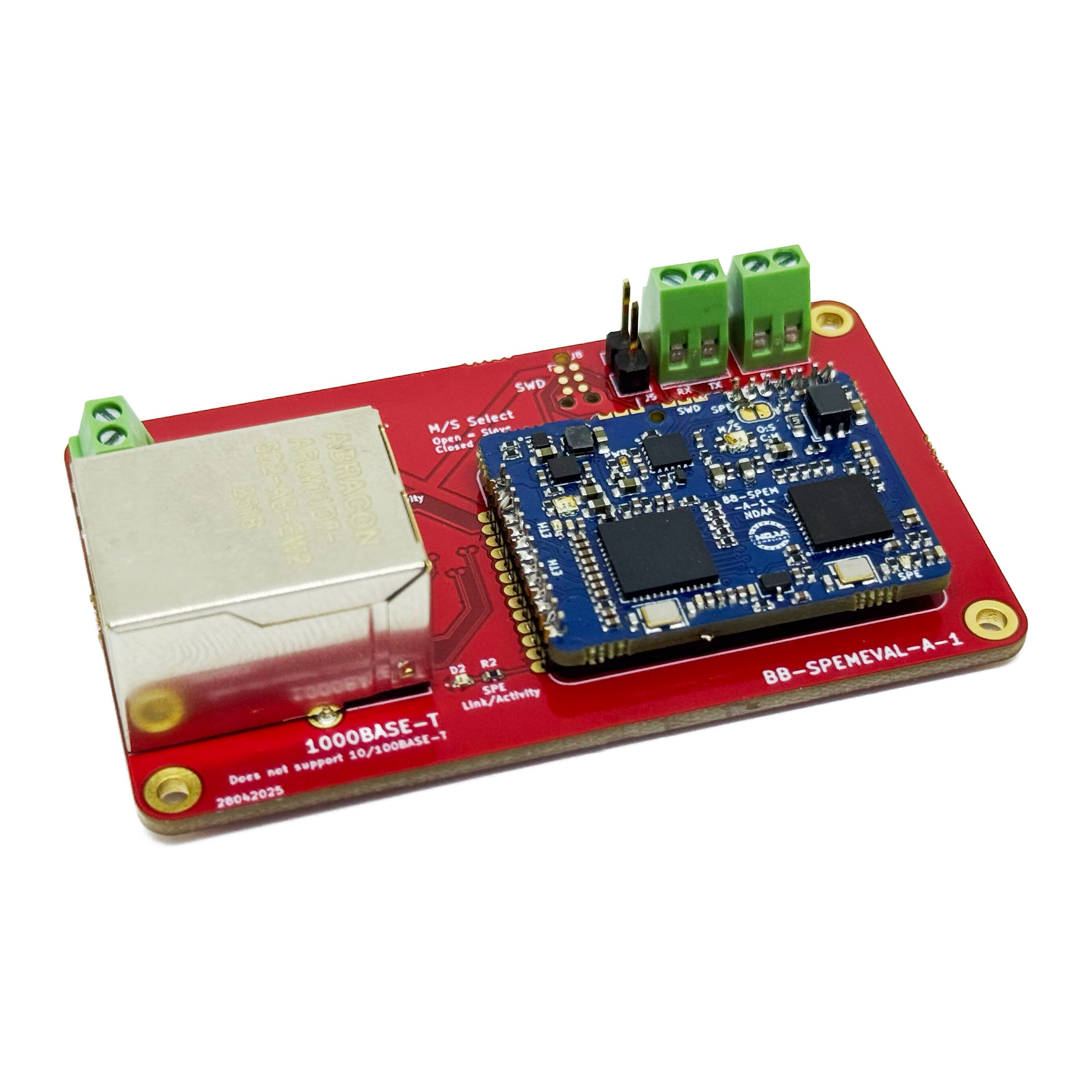
An evaluation kit for SPEBlox Module SPEBlox Module Evaluation board is a pre-a
SKU · BB-RCM-A-1