
mmWave Long Range Antenna | 100m range, 74° x 12° FoV
See farther without giving up horizontal coverage BB-MM1-A-1 is the long-range...
From$250.00
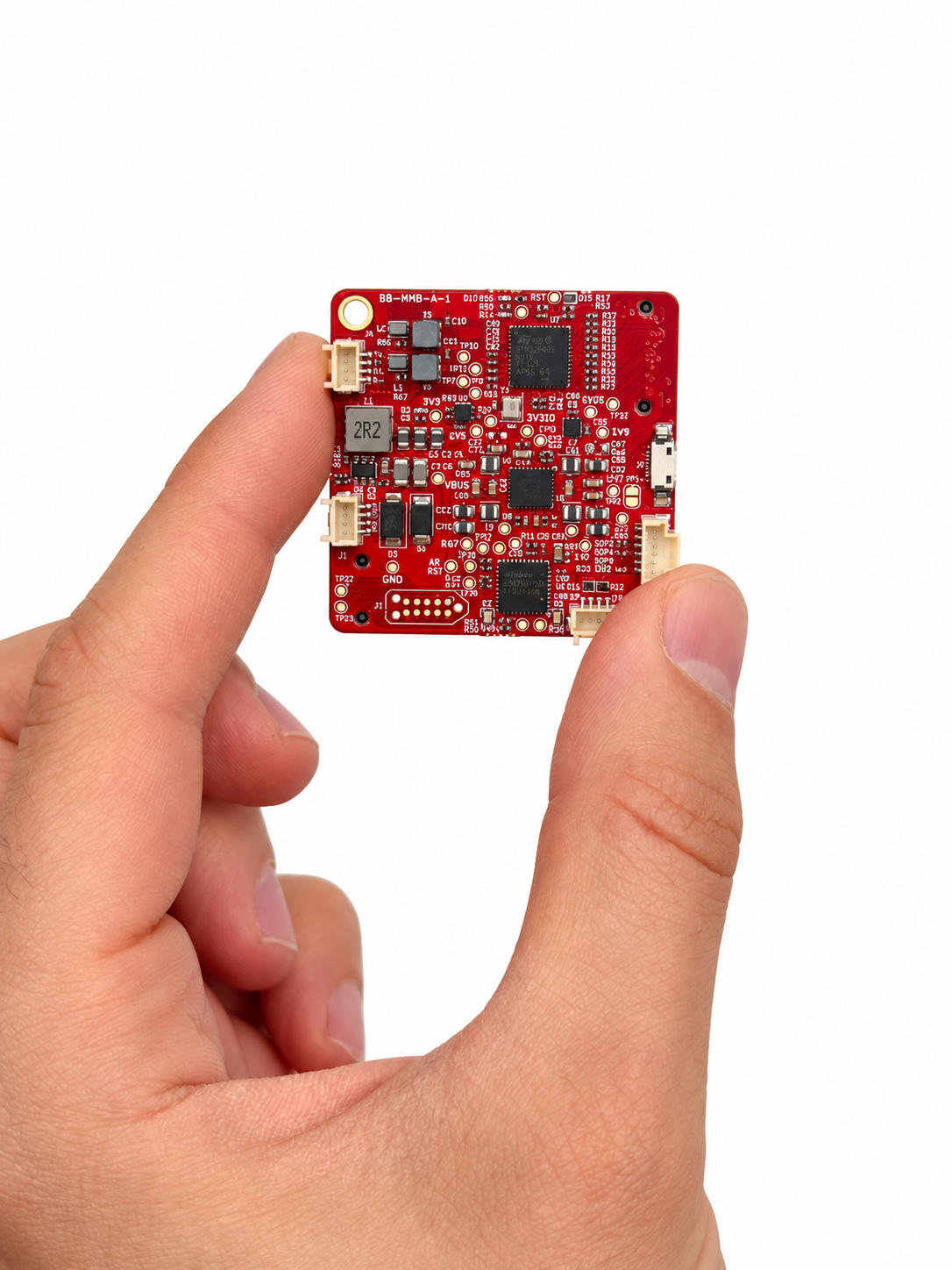
BB-MMB-A-1 is the baseboard at the heart of the BotBlox modular mmWave radar platform.
Pair it with one of our interchangeable antenna boards and you have a compact radar sensor ready to drop into UAS, counter-UAS, robotics and sensor-fusion systems.
No RF design. No antenna tuning. No radar signal-processing expertise required. Simply connect power, choose your interface, snap on an antenna and start detecting.
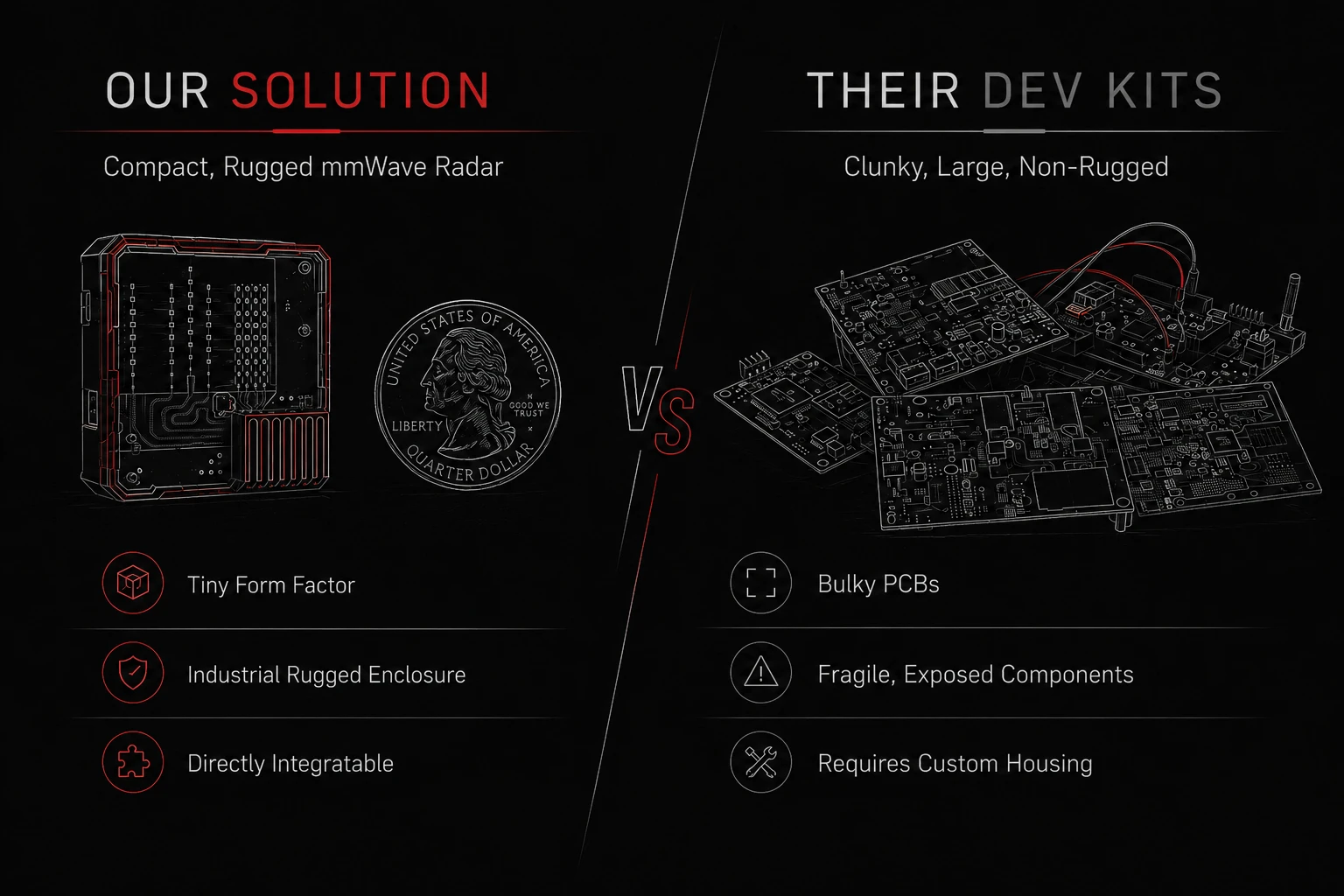
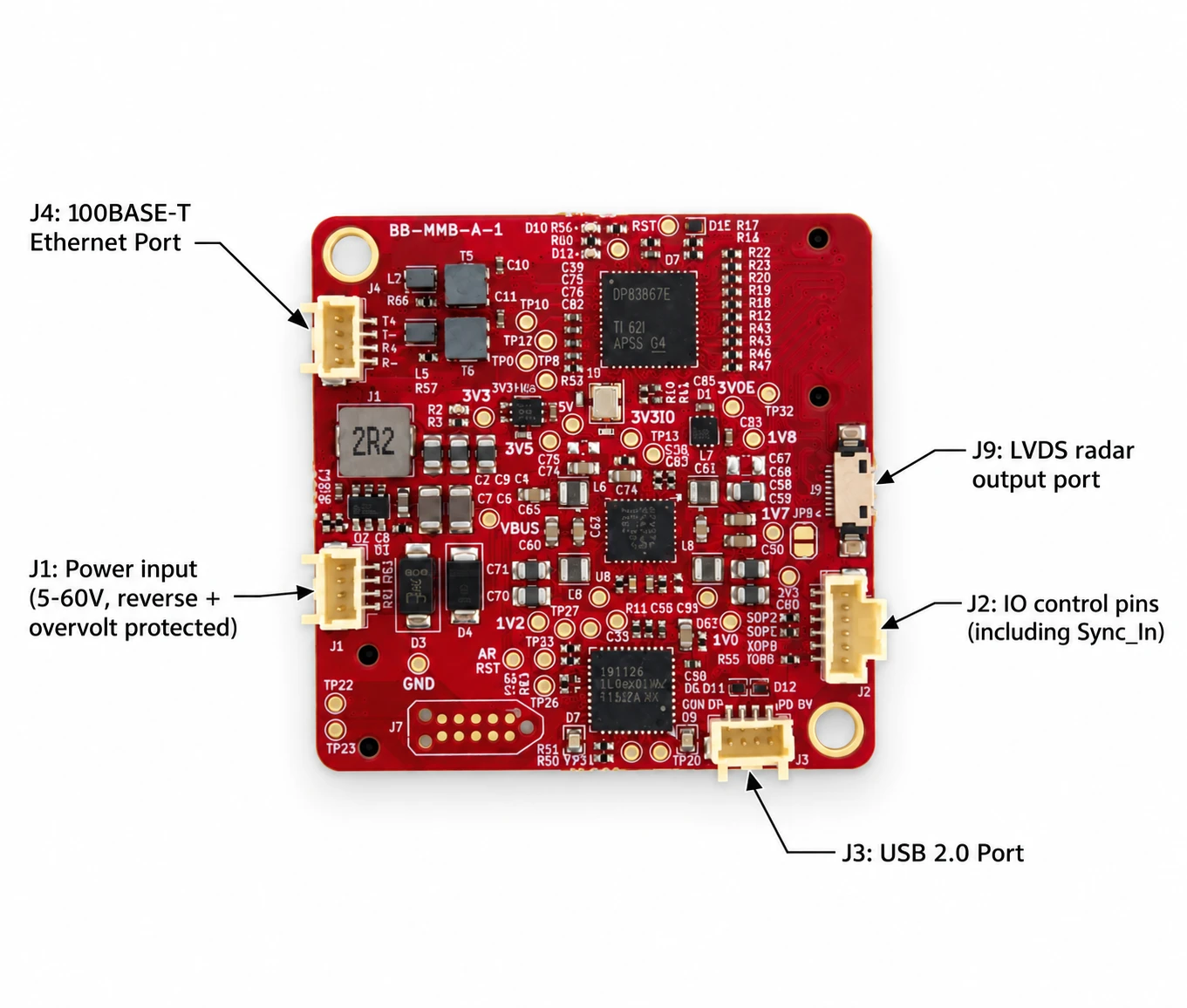
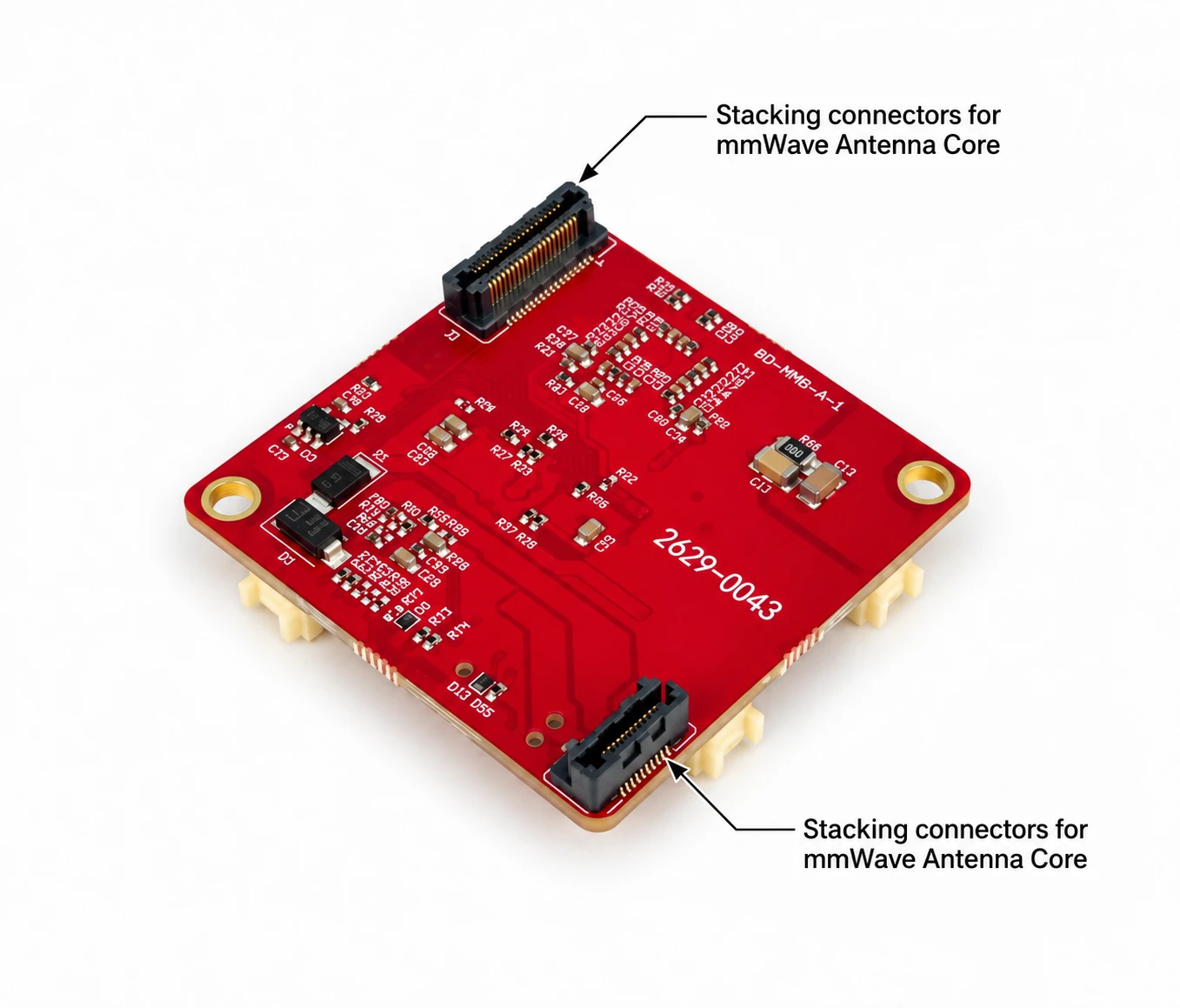
BotBlox mmWave radar is split into two parts:
The Baseboard
Handles power, processing and communication with your system. This part doesn't change.
The Antenna Board
Determines how the radar sees — its horizontal FoV, vertical FoV and detection range.
Every BotBlox mmWave antenna board works with the same BB-MMB-A-1 baseboard.
So if your application changes, you don't need to replace the whole radar or redo your integration. Just swap the antenna board.
It's a lot like changing lenses on a camera. The camera stays the same; you pick the lens that gives you the view you want.
With BotBlox mmWave, the baseboard stays the same and you change the antenna depending on what you need to see.
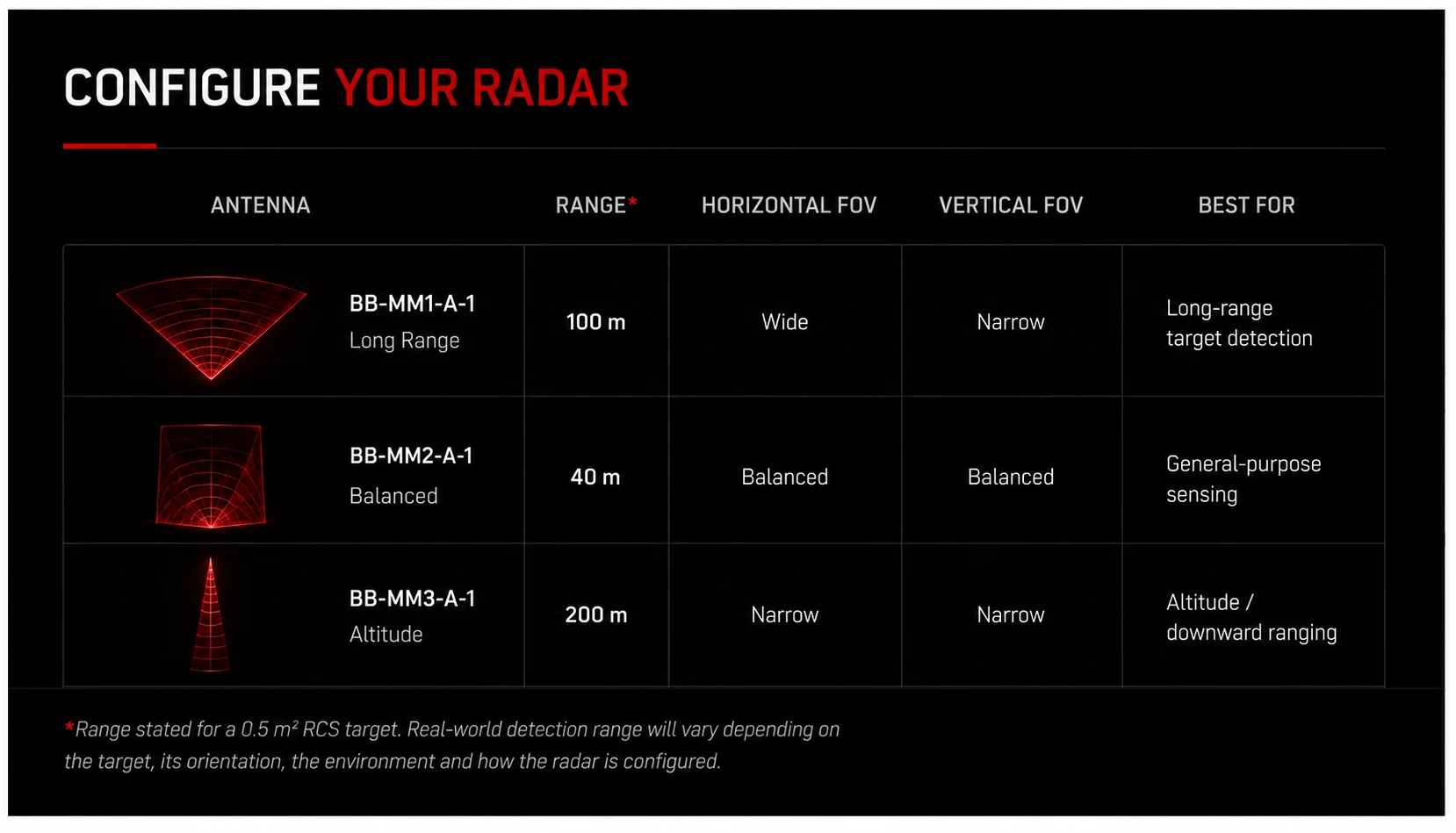
Our radar can measure distance, velocity and position, giving your system useful sensing data even when cameras and other optical sensors struggle.
Read our tech docs mmWave here.
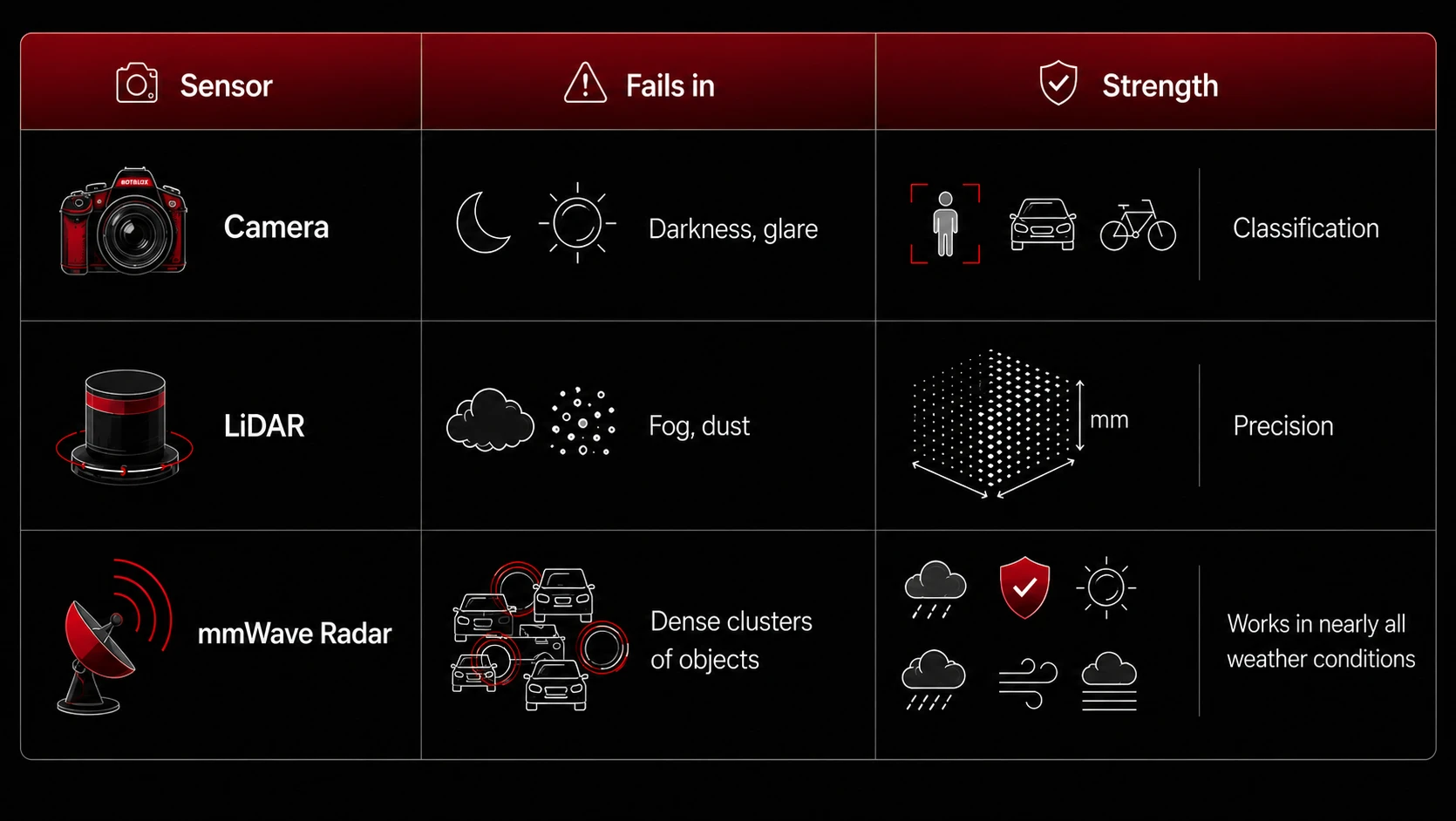
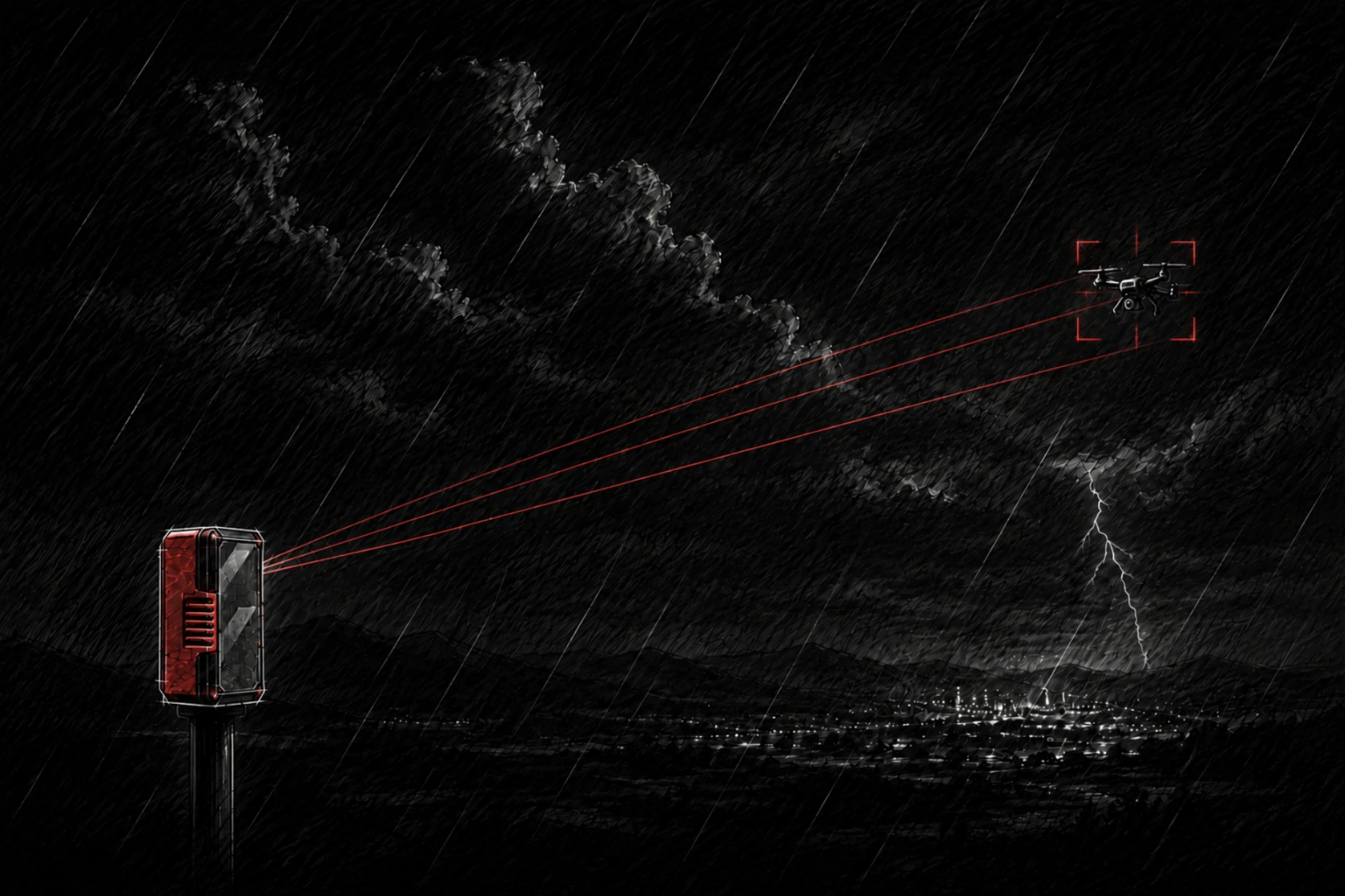
Radar doesn't need clear skies or good lighting to work.
That makes mmWave useful on systems that need to keep sensing through darkness, fog, dust, smoke and other difficult conditions.
Depending on the antenna you choose, the BotBlox mmWave platform can detect targets at up to 200 m.
It's also built with real deployments in mind:
There's a basic tradeoff with radar: the more you want to see around you, the less far you can see.
Field of View, or FoV, is simply how much of the world the radar sees at once.
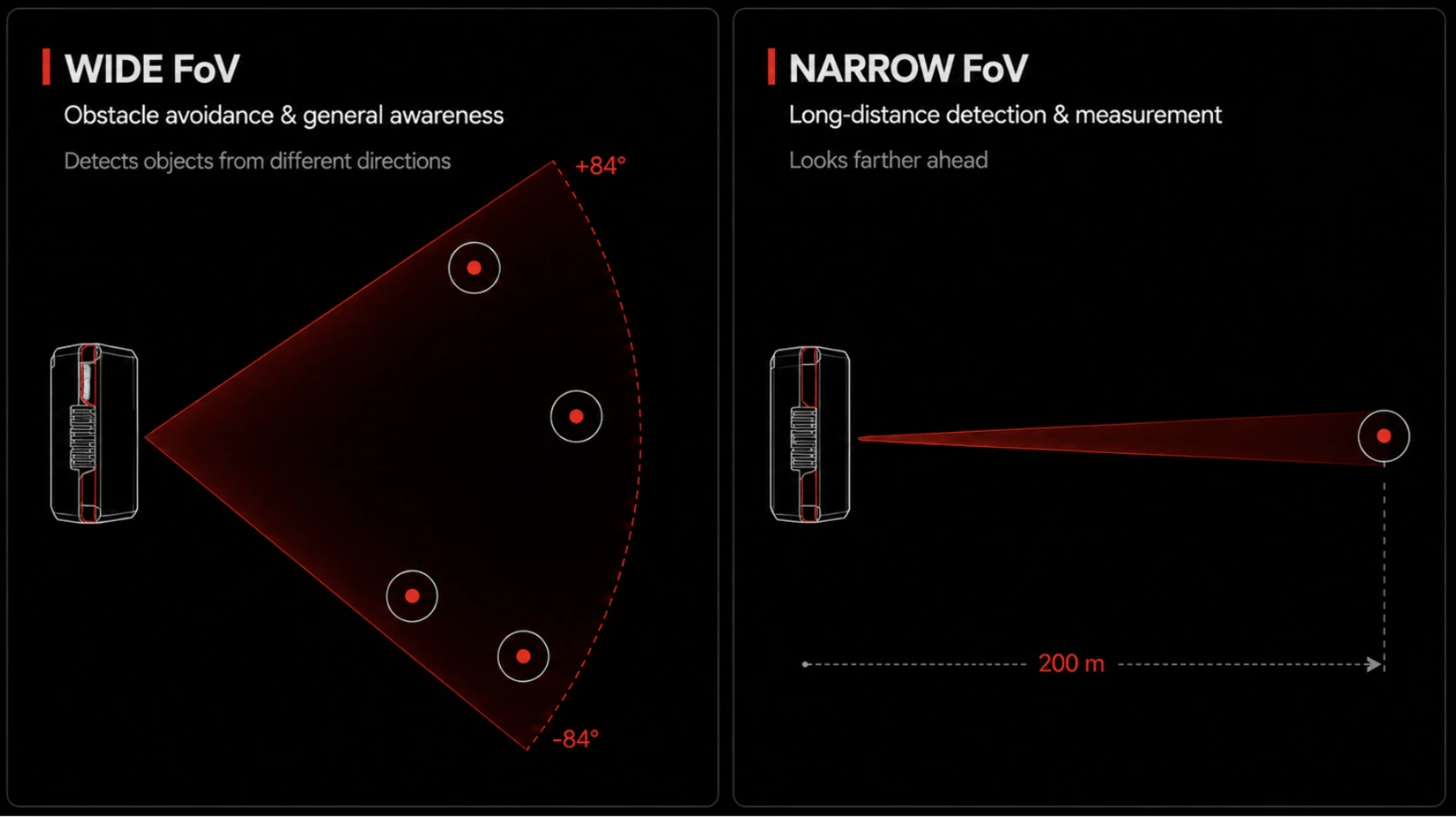
A wider FoV sees more around you, but over a shorter distance.
A narrower FoV sees less at once, but can detect things much farther away.
Neither is better. It just depends on the job.
A wide FoV is useful for obstacle avoidance and general awareness, where something could appear from almost any direction. A narrow FoV makes more sense when you need to look farther ahead or measure distance in one specific direction.
Most radar modules have a fixed antenna, so you're stuck with the FoV and range they were designed for.
We wanted ours to be more flexible.
I need to see far ahead while keeping a wide horizontal view
Choose BB-MM1 Long Range.
I want a good mix of range and coverage
Choose BB-MM2 Balanced.
I need long-range sensing directly below my aircraft
Choose BB-MM3 Altitude.
Not sure yet?
We've made the price accessible enough so that you can try different antennas in your own application.
BB-MMB-A-1 is designed to make adding radar to your system straightforward.
Instead of starting with an RF evaluation kit and building everything around it, you get the power handling, processing and interfaces in one compact module.
Ethernet, USB and CAN are available through compact connectors, and there's also a stacking interface if you want to connect it directly to another PCB.
So whether you're building a drone, robot or sensor-fusion platform, you can treat the radar much more like any other sensor in your system.
Detects and tracks aerial targets for drone detection, perimeter security and airspace monitoring.
Add obstacle detection, ranging and velocity measurement to autonomous robots and mobile platforms.
Use radar alongside cameras, thermal imaging or other sensors to keep getting useful data when visibility gets poor.
Track moving objects without depending on good lighting or a clear optical view.
Radar gives you a few things that are particularly useful on autonomous systems:
That doesn't mean radar replaces cameras or LiDAR.
They each do different things well. Cameras are great for understanding what an object is. LiDAR is great for detailed 3D mapping. Radar is especially useful for reliable distance and motion sensing when visibility isn't ideal.
In a lot of systems, they work best together.
BB-MMB-A-1 is meant for engineers who want to add radar to a real product without having to become RF engineers first.
You don't need to design:
The radar hardware is already packaged into a compact module that's ready to integrate into SWaP-constrained systems.
A complete BotBlox mmWave radar has two parts:
The antenna snaps onto the baseboard through a single stacking connector.
Not much:
1 × BB-MMB-A-1 Baseboard + cables
1 × compatible BotBlox mmWave Antenna Board
Power + your preferred interface
Then you're ready to start receiving radar data.
No.
The RF design and antenna work are already taken care of. Choose an antenna, connect the radar to your system and start working with the detection data.
Yes. Radar doesn't rely on visible light, so it can keep operating in darkness and in conditions like fog, dust and smoke where optical sensors may struggle.
Not really — they solve different problems.
Cameras are great for visual information and classification. LiDAR gives you detailed spatial data. Radar gives you direct range and velocity measurements and works well when visibility is poor.
For many autonomous systems, using them together gives you a more reliable picture of what's going on.
mmWave radar is well suited to tracking moving aerial targets because it measures both range and velocity directly.
How far away a particular drone can be detected depends on the target, antenna, orientation and environment.
Provide power, connect through one of the supported interfaces and choose the antenna that fits your application.
That's it from a hardware point of view — there's no need to design your own RF section or antenna system.
BB-MMB-A-1 is currently in development.
Interested in trying the hardware? Get in touch with the BotBlox team.
Read our Understanding mmWave whitepaper for a deeper look at how mmWave radar works.
SKU · BB-MMB-A-1


See farther without giving up horizontal coverage BB-MM1-A-1 is the long-range...

A little bit of everything BB-MM2-A-1 sits right in the middle of the BotBlox...

Long-range sensing BB-MM3-A-1 is the narrowest antenna in the BotBlox mmWave...
SKU · BB-MMB-A-1